
NotLoudNow.com is the public customer and investor destination.
Investor narrative
Not Loud Now turns one loud room into a private conversation.
Not Loud Now is software, not hardware. People still meet in noisy physical places, but the tools for hearing, remembering, translating, and privately augmenting those conversations are fragmented. We package the full table into one consent-first app that runs on the phones and headphones customers already own — no device to manufacture, ship, or replace.
First validation demoTurn a loud event table into a private audio room in under one minute.
That is the demo investors and customers can understand without a long explanation.
Start with noisy tables, not generic meeting transcription.
Recording, transcripts, and AI are visible states, not hidden features.
Validate QR join, caption recovery, rewind, and participant channels before expanding the product surface.
Equipment fit
Best with premium noise cancellation. Broad by design.
The strongest demo should start with iPhone plus premium ANC earbuds, because the experience is easiest to understand when the room drops away. The product should still support standard Bluetooth and wired headphones so the market is not locked to one brand.
9.6/10 compatibility fit
9.3/10 compatibility fit
9.2/10 compatibility fit
9.1/10 compatibility fit
Key investor thesis
Hardware proved the need. Software captures the table.
Apple, Bose, Sony, Phonak, Sennheiser, and others have already spent years proving that people will pay to hear speech more clearly in noisy places. That validates the pain. Not Loud Now does not need to manufacture another earbud, microphone, or hearing device.
The opportunity is the missing software layer: a private table room that works across the phones, earbuds, headphones, and microphones people already carry, then adds captions, rewind, consent, translation, and invited AI around the live conversation.
Specialized and premium devices show customers already care about speech in noise.
QR join, per-person channels, captions, rewind, consent state, and AI help become software.
No inventory, no device replacement cycle, and no need to bet the company on one headset.
Technical feasibility
The hard part is not sending audio. It is not sending the whole room.
A narrow first version is technically plausible if it is built as an adaptive group audio system. The defensible layer is local voice cleanup, speech-to-noise scoring, adaptive mic control, voice gating, latency control, captions, rewind, and consent-first AI.
The first proof should avoid universal noise-removal claims. Start with small groups, certified headsets, local host-mixed audio, push-to-talk fallback, and measurable restaurant/bar tests.
Read the technical paper
Built from the adaptive group audio research: local cleanup, mic state control, platform approach, safe claims, and source notes.
Open paper sectionPositioning
The wedge is the live table, not another AI meeting app.
People do not only want quieter rooms — they want to keep the conversation. One concrete moment carries the whole pitch: a loud dinner, event, or business table becomes a private audio room. Captions, rewind, translation, and AI are accelerants once that human problem is solved, not the lead.
Core insight
People do not only want quieter rooms. They want to keep the conversation.
Category gap
Noise cancellation, captions, meetings, translation, and AI notes exist separately. No one owns the live table.
Best first proof
Fast QR join, clean captions, 15-second rewind, and visible consent in real venues.
Brand signal
NotLoudNow.com is secured as the public domain; company naming can remain a legal and administrative detail.
Executive summary
A private audio room for the people already in front of you.
Not Loud Now starts as a premium mobile app for noisy restaurants, conferences, family gatherings, business meals, and travel. Each participant joins a table room by QR code. The product provides live captions, rewind, participant controls, visible recording consent, summaries, translation, and invited AI help.
Consumer social
Dinners, bars, travel, family tables, and loud events where people want the conversation back.
Professional rooms
Business meals, sales dinners, investor meetings, conferences, and networking floors.
Accessibility-adjacent
Captions, rewind, and clearer voices for people who struggle with background noise.
AI memory layer
Consent-first transcripts, summaries, translation, and invited expert help for real-world conversation.
Why now
Earbuds, speech AI, and social fatigue finally meet.
AirPods and similar devices made headphones normal in public. Realtime speech models made captions, summaries, translation, and voice isolation more believable. The missing product is a socially acceptable room layer that starts with the human problem before it sells the AI.
Positioning rule
Do not market this as a hearing aid, surveillance recorder, or meeting bot. Market it as: Hear the table. Lose the room.
Business model
Start consumer-simple, expand into professional tables.
The first monetization path should be a low-friction Pro subscription. The larger opportunity is team and event usage where transcripts, decisions, translation, remote guests, and AI expert context have direct business value.
Consumer Pro
$8 to $15 per month for captions, rewind, saved transcripts, and longer table sessions.
Team tables
$20 to $40 per seat per month for business dinners, field teams, sales, recruiting, and founder meetings.
Events
Per-event packages for conferences and hospitality venues that need quieter networking and accessible table rooms.
AI add-ons
Usage-based summaries, translation, expert guests, and long-context conversation memory.
Partner-led growth
Do not buy attention first. Borrow trust first.
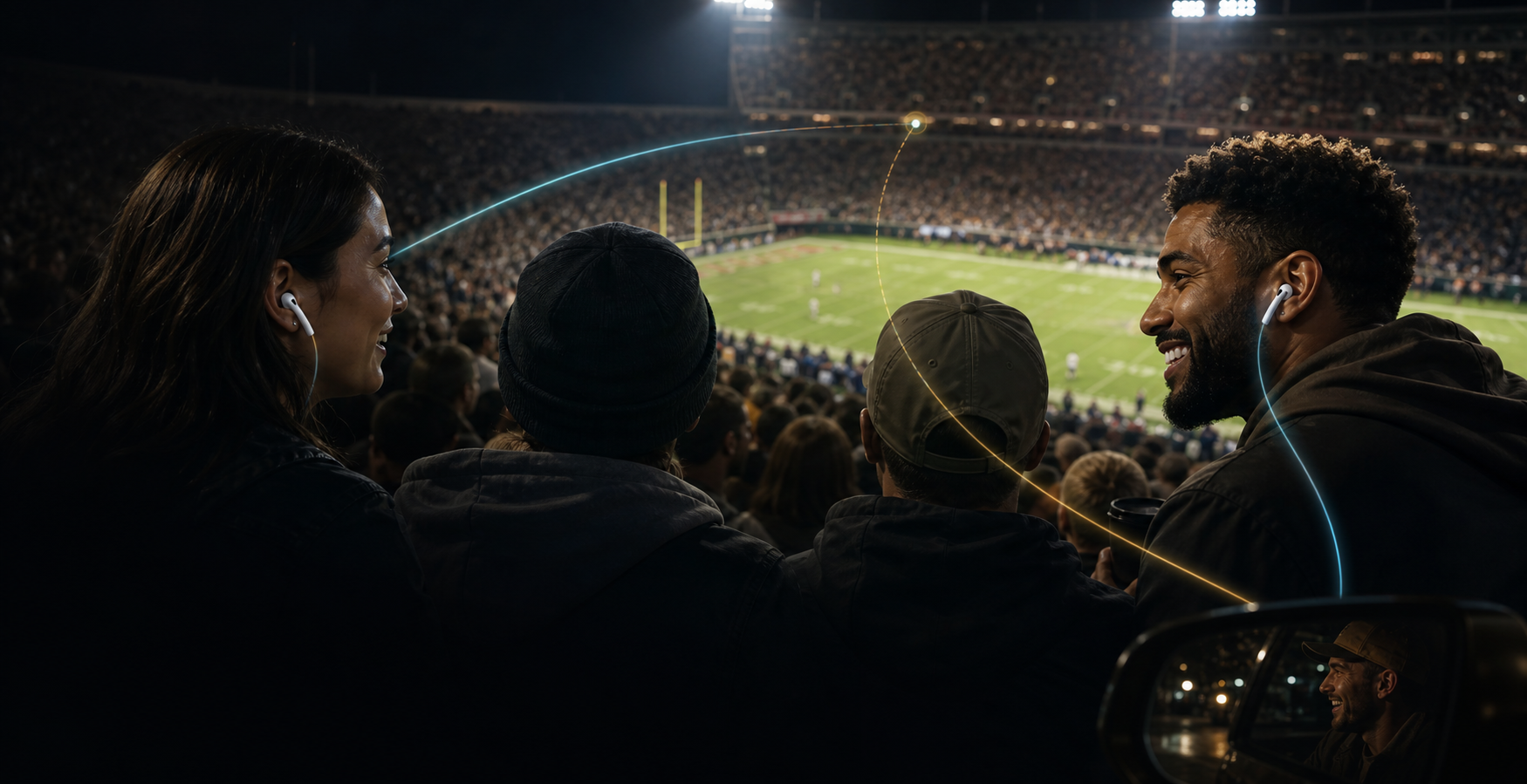
The early marketing play should not be generic paid ads. Not Loud Now should give free or discounted team access to partners who can use the product internally, prove the value in their own noisy work, and introduce it to the exact audiences that already trust them.
Free team usePilots become proof
Staff adoption, partner demos, creator stories, referrals, and reviews compound together.
Partners
Creators
Resellers
Customers
Staff-first partners
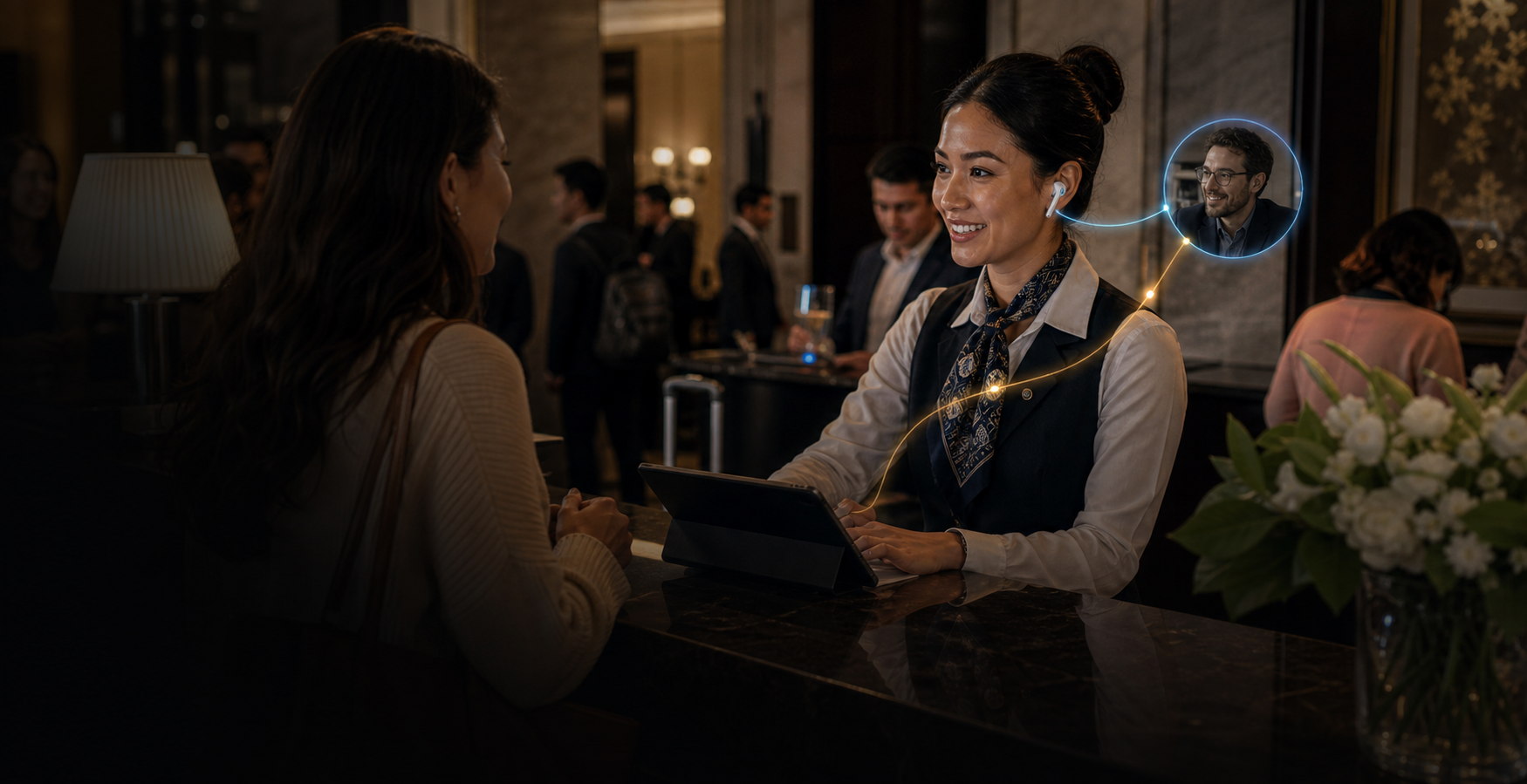
Give free or discounted team access to companies whose staff already fight noisy conversations, then co-market to their customers once the internal use is real.
Reseller wedge
Recruit AV/event producers, sales trainers, hospitality consultants, field-service integrators, and headphone/audio retailers to sell the software layer on top of products they already move.
Creator proof
Use creators who visibly benefit from the product: food reviewers, sports fans, travel creators, accessibility-adjacent educators, sales coaches, and family-care creators.
Pilot-to-proof loop
Turn each pilot into short demo clips, reviews, partner case studies, referral links, and customer introductions before scaling paid media.


Automated growth engine
Use AI to find and prepare opportunities, not to spam people.
The practical system is an AI-assisted account engine: search, score, enrich, draft, approve, send, call, measure, and recycle proof. Automation should be aggressive in research and careful in contact: no AI-voice robocalls, no hidden recording, no medical claims, and clear opt-outs on any outbound email.
Agents scan public directories, event calendars, venue lists, reseller sites, creator channels, review platforms, and company pages for fit signals.
Each account is scored for audience reach, noisy-use relevance, staff-use value, ability to resell, brand trust, compliance risk, and warm-introduction paths.
AI drafts email, LinkedIn, and call scripts, but a person approves the account, claim, source, and offer before anything goes out.
Use click-to-call or human power dialing for business contacts. Do not use AI-voice robocalls, spoofing, consumer autodial blasts, or undisclosed recording.
Research anchors
The plan leans on trust, review behavior, creator distribution, AI-assisted sales research, and compliance constraints. These are links investors can follow.
Investor research notes
A pre-paid-media distribution plan, not a logo wish list.
The practical growth thesis is that Not Loud Now makes existing real-world experiences more valuable: better dinners, dates, networking, venues, and reasons to buy good headphones. The short memo and fuller partnership paper below show how pilots can become credible distribution evidence.
Short recommendationMarketing memo
Not Loud Now should not start by buying attention. It should trade value for distribution through partners whose users already struggle with noisy real-world conversation.
Best first targets
- Timeleft or Thursday for a real dinner/singles-event pilot.
- soundcore or JLab for an affiliate, buyer-guide, or giveaway channel.
- Breeze for a first-date venue communication pilot.
- SoundPrint or KultureCity for trust and inclusion credibility.
- Swapcard, Cvent, or a specific organizer after one live event proof.
The wedge is not a hearing aid, translation app, or meeting transcript product. The wedge is a consent-first group conversation room for noisy real-world places.
Full paperPartnership strategy
The strongest low-cost growth path is ecosystem distribution inside moments where people already want better conversation: social dinners, singles events, conferences, founder dinners, lively restaurants, venue discovery, and headphone discovery.
Distribution partners
Headphone affiliates, singles-event operators, venue discovery platforms, creator communities, and restaurant/event newsletters.
Pilot partners
Dinner clubs, singles events, conferences, founder dinners, restaurants, and event organizers that can produce live proof.
Trust partners
Sensory inclusion, accessibility-adjacent, noise-discovery, and venue-audio groups that reinforce responsible defaults.
Adaptive group audio governance.
In one line: each phone cleans its own outgoing voice and quiets itself when it is the noisy one, so a single bad microphone cannot drown out the whole table.
The key insight from the new research is that group audio quality is not only a noise-cancellation problem. It is also a microphone-governance problem. Each device should improve its own outgoing voice, score whether its local environment is harming the group, and adapt mic behavior before that audio reaches the table.
System objective
Reduce unnecessary background noise before transmission, prioritize useful speech, and protect the group from disruptive open microphones.
Safe promise
Cleaner speech, less background noise, and better control in real-world group environments, without claiming perfect audio or medical benefit.
Future path
Improve over time with route scoring, device-specific tuning, stronger speech enhancement, and multi-microphone experiments where supported.
- Mic capture
- Platform voice processing
- Noise suppression
- Echo cancellation where needed
- Automatic gain control
- Voice activity detection
- Speech-to-noise scoring
- Adaptive mic control
- Low-latency encoding
- Group transmission and playback
The user can speak normally while the app monitors local noise, applies cleanup, and avoids transmitting non-speech audio where possible.
If background noise rises, the app can recommend push-to-talk without forcing the change immediately.
If open mic becomes disruptive for long enough, the app can switch that user to push-to-talk to protect the table.
If enabled, the app can keep monitoring locally and restore open mic after the environment stays clear.
Platform approach and constraints
The core architecture should work with the active supported microphone stream. Native iOS and Android voice-processing paths can provide the first layer for latency, battery, and device tuning. The product should not promise simultaneous phone-mic plus headset-mic capture on every device; multi-microphone processing belongs in the future research track.
Approved claims boundary
Use language like: designed to reduce disruptive background noise before audio is shared, and can switch noisy users to push-to-talk. Avoid claims that the app removes all background noise, works perfectly with all headphones, replaces hearing aids, guarantees clear audio, or creates hardware-grade noise cancellation.
Built on platform-native and open-source audio processing references: Apple and Android voice APIs, WebRTC, Opus, RNNoise, and DeepFilterNet. See technical sources.
Start where the room already matters.
A-tier pilots
Timeleft, Thursday, Breeze, SoundPrint, one founder dinner or conference organizer.
Ask for one event, one city, one host kit, or one venue test - not a broad integration.Headphone channel
soundcore, JLab, Shokz, JBL, Jabra, Sony, Bose, Apple.
Start with a compatibility guide, affiliate/discount link, giveaway, or buyer guide. No hardware partnership is implied.Hospitality and events
OpenTable operators, Swapcard customers, Cvent planners, venue groups, sponsor lounges.
Approach after one live proof with event join rate, completed sessions, and partner feedback.Moonshots later
Bumble, Hinge, Tinder, large hospitality platforms, large audio OEMs.
Do not lead here until privacy posture, pilot evidence, and partner collateral are stronger.Small asks that can create proof.
Dinner or singles event: Visible QR join, captions on, recording off, optional headphones, host script, and post-event feedback report.
Founder or conference networking: Roundtable room templates, sponsor/lounge QR cards, captions, optional summaries, and aggregate engagement report.
Headphone affiliate test: Works-well-with guide, honest testing notes, discount or affiliate link, giveaway, and tracked waitlist attribution.
Inclusion-adjacent pilot: Venue or community test focused on consent, captions, and noisy-place usability without medical or treatment claims.
Approved lane.
- Recording off by default.
- Visible room entry and participant state.
- No hidden listening or secret recording.
- No hearing-aid replacement or treatment claims.
- No date scoring, chemistry analysis, or safety guarantees.
- No partner data sharing without explicit consent and written agreement.
Turn partner interest into investor evidence.
First 30 days
Create demo video, partnership one-pager, consent one-pager, compatibility page draft, buyer guide draft, pilot KPI sheet, and outreach emails. Begin outreach to Timeleft, Thursday, Breeze, soundcore, JLab, Shokz, and SoundPrint.
Days 31 to 60
Secure one social dinner or singles event pilot, one founder/conference networking pilot, one headphone affiliate/giveaway test, and one trust-building advisor or community conversation.
Days 61 to 90
Package proof into repeatable partner offers, publish partner landing pages, write the first case study, and approach larger hospitality, event-tech, and dating platforms with evidence.
Rank partners by speed and relevance.
Use-case fit25
Their users already have noisy in-person conversations.
Startup approachability20
Public partner form, affiliate path, local operator route, or host network exists.
Distribution leverage20
The partner can expose Not Loud Now to relevant users cheaply.
Speed to test15
A pilot can plausibly run within 30 to 60 days.
Brand signal10
A win improves customer or investor trust.
Economics10
Affiliate, referral, revenue share, or repeatable package is plausible.
Deals most likely to get yes.
Content swap: partner newsletter or social mention for a useful category article and demo clip.
Affiliate/referral: discount or referral link for a compatibility page, buyer guide, and creator demos.
Co-branded pilot: one event, city, or venue in exchange for setup, QR assets, host training, and a report.
Host bundle: free pilot kit for hosts or venues in exchange for usage proof and a quote if it works.
Outreach templates
Concrete enough to send after a demo exists.
Social dinner or singles event
Subject: A simple pilot to make noisy dinners/events easier to talk throughYou already create real-life connection in restaurants, bars, and events, and those are exactly the places where great chemistry can get lost to noise.
I would like to propose one small pilot: one event or dinner series, visible QR join, captions on, recording off by default, optional headphones for guests who want them, and a post-event feedback report.
Low lift on your side. Not Loud Now provides setup, scripts, and reporting.
Headphone or earbud brand
Subject: Works-well-with partnership for noisy dinners and live eventsNot Loud Now is a software layer for clearer group conversation in noisy bars, dinners, conferences, and events.
The first ask is intentionally small: include the product in our best headphones for noisy dinners/events guide, use an affiliate or discount path where allowed, build a simple compatibility page, and optionally run a giveaway tied to our waitlist.
No hardware ask. No custom engineering. Just a clear use case and tracked traffic.
Hospitality or event platform
Subject: Pilot idea for noisy venue communicationRestaurant and event operators already treat noise as a real guest variable. Not Loud Now is for the next step: helping groups still have the conversation when the venue is lively.
A narrow pilot can use table QR cards, private group rooms, captions and rewind, visible recording/transcript controls, and a partner report on usage and guest feedback.
This is not hardware and not a medical product. It is a consent-first communication layer for the table.
Source notes
Research anchors investors can follow.
TimeleftReal-world dinners, affiliate, brand, restaurant, and bar partner surfaces.ThursdayIRL dating events, brand activations, host network, and venue partnership logic.BreezeNo-chat dating flow built around real dates at partner venues.soundcore affiliateAccessible audio affiliate path for a buyer-guide or giveaway motion.Shokz affiliateOpen-ear and professional headset fit for events and work settings.Jabra partnersAudio partner channel reference for later business development.OpenTableHospitality and restaurant platform context, including venue discovery and partner surfaces.SoundPrintNoise-discovery context that validates loud venues as a real consumer problem.Bluetooth SIG AuracastFuture venue audio infrastructure context, useful for investor narrative but not first integration.FTC endorsement guidesAffiliate, creator, and giveaway disclosure guardrail.FTC CAN-SPAM guideOutbound email compliance guardrail.FTC health products guidanceClaims boundary guardrail for avoiding medical or treatment language.
Technical sources
Audio architecture references.
Apple voice chat audioVoice-processing APIs and modes for communication-style apps.Apple microphone selectionPlatform guidance for supported input route selection.Android NoiseSuppressorNative Android audio effect for suppressing noise where available.Android AcousticEchoCancelerNative Android audio effect for communication echo handling.WebRTC audio processingEstablished real-time communication audio-processing module.Opus codecLow-latency codec commonly used for interactive voice.RNNoiseOpen-source neural noise suppression reference.DeepFilterNetReal-time speech enhancement research and implementation reference.
Build plan
Prove the table before building the whole platform.
Landing page, waitlist, user interviews, technical spike for local room audio, consent UX, and caption quality benchmarks.
Private alpha for iOS first: QR table join, participant roster, captions, rewind, visible recording state, and summary export.
Beta in restaurants, coworking spaces, conferences, and founder dinners with telemetry on setup time, retention, and audio quality.
Paid Pro tables, team accounts, event partnerships, translation packs, and AI expert add-ons.
AI strategy
AI should be quiet until invited.
The AI layer is valuable, but it should not dominate the product. The first experience should make voices clearer and missed words recoverable. Then AI can summarize, translate, answer questions, or act as a private sidekick when explicitly requested.
Best first AI features
What did I miss? Summarize the last five minutes. Translate this table. Capture decisions and next steps.
Risks
The hard parts are social, trust, and audio quality.
Social awkwardness
Make setup feel like joining a shared table, not wearing a gadget alone. The marketing must show groups using it together.
Privacy and consent
Recording, AI, and transcript states must be visible to every participant with clear controls and no hidden capture.
Audio reliability
The MVP should prove speech clarity, caption recovery, and setup time before adding complex features.
Medical claims
Position as a conversation app, not a hearing-aid replacement or regulated health product.
Proceed, but keep the MVP narrow.
Build the first version around one magical moment: start a table in a loud place, hear better, read what you missed, and keep recording transparent. The platform vision is strong, but the first proof should be brutally practical.